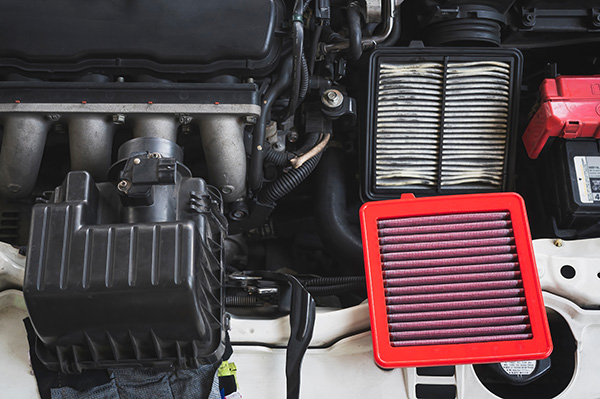
A high-flow air filter promises to let the engine breathe more freely. If you've spent money on performance parts, that sounds appealing. But what about the dust that gets through? Airflow and filtration are two different measures, and a filter designed to reduce restriction still has to protect the engine from abrasive particles. Some high-flow products offer excellent filtration. Others make a different trade-off. The label alone doesn't tell you how well the filter performs in real driving.
How Disposable Engine Air Filters Trap Dirt
Most factory-style disposable filters use pleated paper-based or synthetic media to capture airborne particles before they reach the intake.
The large pleated surface lets air pass while trapping dust, grit, and road debris. The housing seals around the filter so the incoming air has to pass through the media.
Filtration quality varies considerably between products. Not every disposable filter captures the same amount of fine dust or holds the same amount before becoming restrictive. A correctly fitted filter with good efficiency is designed to protect the engine over its intended service life. If the sealing edge is damaged or the airbox lid doesn't close properly, even excellent media won't prevent dirt from entering around it.
What Makes Performance Air Filters High Flow?
Performance filters often use cotton gauze, foam, or specialized synthetic media. Some are oiled, while others are designed to operate dry. By changing the media structure or increasing surface area, manufacturers aim to reduce resistance to airflow. The benefit shows up mainly when the original intake restricts airflow at high engine load.
On a stock daily driver, changing only the filter often produces little noticeable horsepower gain because the factory intake already supplies enough air for normal operation. A 'high-flow' label is only an advertising claim until you see credible test data. It's how it performs in tests that measure airflow restriction, filtration efficiency, and dust-holding capacity together. Those measurements reveal more than marketing language about improved breathing.
Can a High-Flow Filter Allow More Fine Dust Through?
Yes, depending on its design and efficiency. A lower restriction filter isn't automatically less effective, but some products achieve greater airflow by allowing more particles through the media. Dust that passes the filter enters the intake, where abrasive particles contribute to wear over time.
Independent laboratory results help compare airflow restriction and filtration efficiency. Methods such as ISO 5011 evaluate filtration efficiency and dust capacity under controlled conditions. Look for meaningful results for the actual filter, not claims that every washable product performs the same way. An excellent reusable filter may protect well, while a poorly designed one may allow more dirt than a quality disposable filter.
How Engine Air Filter Seals Prevent Dirt From Bypassing the Media
A gap around the filter is often a bigger problem than a small difference in filtration efficiency.
Incorrect dimensions, a folded sealing lip, loose clamps, or an airbox cover that isn't fully latched let dirty air bypass the filter. That contamination never has a chance to be trapped, regardless of which media you choose.
Dust tracks on the clean side or an airbox that won't close securely expose a sealing problem.
On a modified intake, the filter should be protected from water exposure and mounted where the manufacturer intended. A high-flow intake that leaves a loose connection or draws water toward the engine is a step backward, even if it sounds more aggressive under acceleration.
Oiled Performance Filters Need Careful Cleaning
Some reusable performance filters require washing, thorough drying, and a measured application of special filter oil. Too much oil can collect in the intake tract and, on some vehicles, contaminate the mass airflow sensor. Too little oil may affect filtration on designs that depend on it. The cleaning method must match the actual filter material.
Before installing a washable performance filter, consider:
- Published filtration efficiency test results
- The correct cleaning and oiling procedure
- The filter's fit in the intake housing
- Any measurable airflow benefit for your engine
Never use high-pressure air or harsh chemicals unless the filter manufacturer specifically approves them. Damaged media doesn't become safe again because it looks clean after washing.
Dusty Roads Change the Performance Filter Decision
A car used mainly on dry, clean pavement faces different exposure from one driven through road construction, gravel lots, or dusty track environments.
More dirt in the incoming air makes filtration efficiency and sealing especially important. The right choice depends on what the vehicle does most of the time, not just how impressive the filter looks beneath the hood.
On a modified performance car, increased airflow demand changes the comparison. The complete intake path needs checking. The filter element isn't always the biggest airflow restriction. If you get new fuel-trim or airflow faults after an intake change, start with leaks or installation issues, not necessarily a bad sensor.
Choosing Between High-Flow and Disposable Air Filters
A good disposable filter is usually a dependable solution for a daily-driven car. A high-quality reusable performance filter is an option when its measured efficiency, maintenance requirements, and airflow characteristics match the application. Neither category wins automatically. Compare actual filtration and airflow results for the exact products, not marketing labels.
Protecting the engine should remain the first priority. If a filter allows more fine particles through, the possible airflow benefit has to be weighed against long-term wear.
If it filters effectively without creating an unwanted restriction, it's doing its job. The ideal filter meets the engine's air demand and consistently keeps abrasive material out.
Get Performance Air Filter and Intake Inspection in Olathe, KS, With Chicane Motorsport
Chicane Motorsport in Olathe, KS, inspects performance air filters, intake seals, airflow components, and related engine concerns. We'll check the installed filter's fit and condition before recommending an upgrade.
Before choosing a high-flow filter, compare how much dirt it stops as carefully as how much air it passes.